

They Said Radiation Won’t Cure It. So Why Are They Recommending It?
Palliative Radiation Therapy for Metastatic Cancer

On Service, Exposure & Evidence — An Oncologist Veteran-to-Veteran Perspective
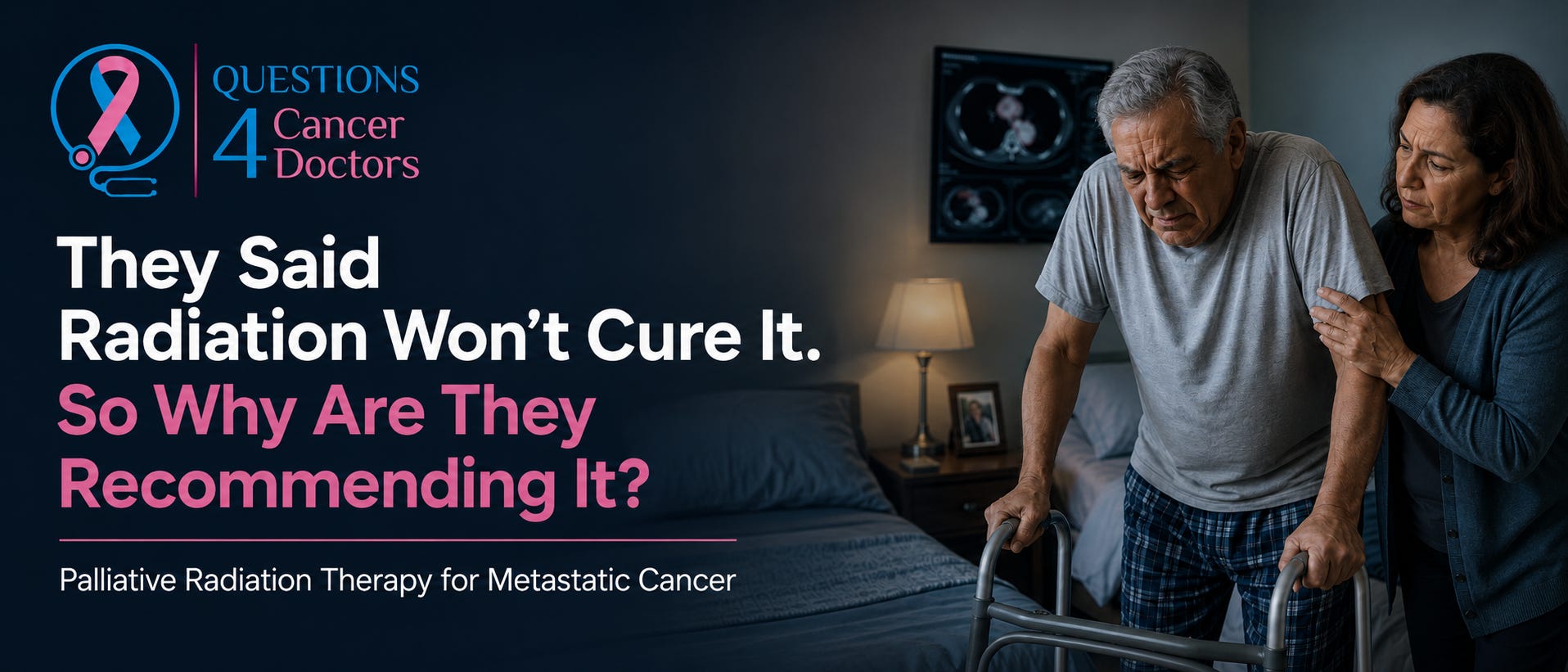
I want to talk to the family members sitting in the corner of the room.
The ones writing everything down. The ones Googling things at 2 a.m. The ones trying to be strong while quietly falling apart inside.
Because I have heard your question more times than I can count — and it deserves a real answer.
“Doctor, if radiation can’t cure my mother… why are they recommending it?”
Let me tell you. Clearly. And without the medical jargon.
The Goal Can Change — and That Is Not Giving Up
Here is something medicine does not always explain well: treatment goals shift over time.
Early in a cancer journey, the goal is often cure — to eliminate the cancer entirely. But sometimes, despite everyone’s best efforts, that is no longer where we are. The cancer may have spread. It may have returned. The body may not be able to tolerate aggressive treatment anymore.
When that happens, the goal does not disappear. It changes.
The new goal becomes quality of life — managing pain, preserving function, keeping your loved one as comfortable and as present as possible for as long as possible.
Palliative radiation is one of the tools we use to get there. And it can be a powerful one.
What Palliative Radiation Actually Does
Palliative radiation is not about chasing a cure. It is about targeted relief.
Here is what it can do:
Reduce bone pain when cancer has spread to the bones — this is one of the most common and effective uses
Shrink a tumor that is pressing on a nerve, blocking an airway, or causing difficulty swallowing, or similar symptoms
Prevent or treat fractures in bones weakened by cancer
Relieve pressure on the spinal cord to preserve extremity movement and reduce pain
Control bleeding in certain cases
Improve breathing when a lung tumor is causing obstruction
In short — palliative radiation helps people feel better, move better, breathe better, and hurt less. That matters enormously.
The Myths That Get in the Way
I understand why families hesitate. Here is what I hear — and what I want to gently address.
Myth #1: “If radiation can’t cure it, there’s no point.”
There is every point. Reducing severe bone pain so your father can sleep through the night — that is the point. Shrinking a tumor so your mother can swallow again — that is the point. Helping your spouse stay mobile and present — that is the point. You may ask your treating radiation oncologist this specific question as well - they will inform you clearly the goal for recommended treatment.
Myth #2: “Radiation will just make them sicker.”
Palliative radiation is typically shorter in duration and lower in total dose than curative treatment. The goal is relief, not aggressive treatment. Side effects exist, but they are weighed carefully against the expected benefit. Your radiation oncologist should walk you through this — and if they have not, that is exactly the kind of conversation I help families prepare for in these articles. Add this to your list of questions.
Myth #3: “Recommending palliative radiation means they’ve given up on my loved one.”
No. It means the care team is still actively working to help your loved one live as well as possible. Palliative care is not surrender. It is skilled, compassionate, intentional medicine.
Myth #4: “We should just wait and see how things go.”
Sometimes that is appropriate. But palliative radiation for bone pain, for example, works best when used before the pain becomes severe or a fracture occurs. Waiting too long can mean missing a window for meaningful relief. Ask your care team about timing.
What I Want You to Walk Away With
Palliative radiation is one of the most under-explained recommendations in oncology. Families receive it as news without context, without preparation, without a moment to ask the questions that are swirling in their heads.
You deserve better than that.
You deserve to understand what is being recommended — and why — before you say yes or no.
If your loved one’s care team has mentioned palliative radiation and you are still trying to make sense of it, be sure to ask questions.
Ask them to slow it down. Ask them to translate the medical language. These articles are meant to help you show up to the next appointment with the right questions — and a little more peace of mind… but it still requires your input.
If you are navigating a VA claim involving cancer, toxic exposure, or complex medical documentation — and you want a physician to help clarify what your records say and what they still need — that is the work I do.
Visit Q4CD.com to learn more about Veterans Medical Review Services, including Medical Record Readiness Reviews, Nexus Opinion Reviews, and Independent Medical Opinions as well as Dependency and Indemnity Compensation (DIC).
This article is for educational purposes only. It does not constitute medical, legal, or VA claims advice, and does not establish a physician-patient relationship.
Until next time — live, laugh, and love on purpose.
Warm regards,
Dr. C.M. “Queen” Williams, M.D.
Radiation Oncologist | Army Veteran | Founder, Q4CD
Q4CD.com |
If this was helpful, share it with a veteran or family member navigating the VA. And if you haven’t subscribed yet — join us here. More coming bi-monthly week.